Help your child talk at home: small changes to routines you already have
The best language practice doesn’t look like practice. Here’s how meals, car rides, and bedtime quietly build your child’s words — no flashcards required.
If you’ve ever searched for “speech therapy activities for toddlers,” you’ve probably found flashcards, worksheets, and crafts that take longer to set up than your child will spend on them. Here’s the good news: none of that is what actually moves language forward.
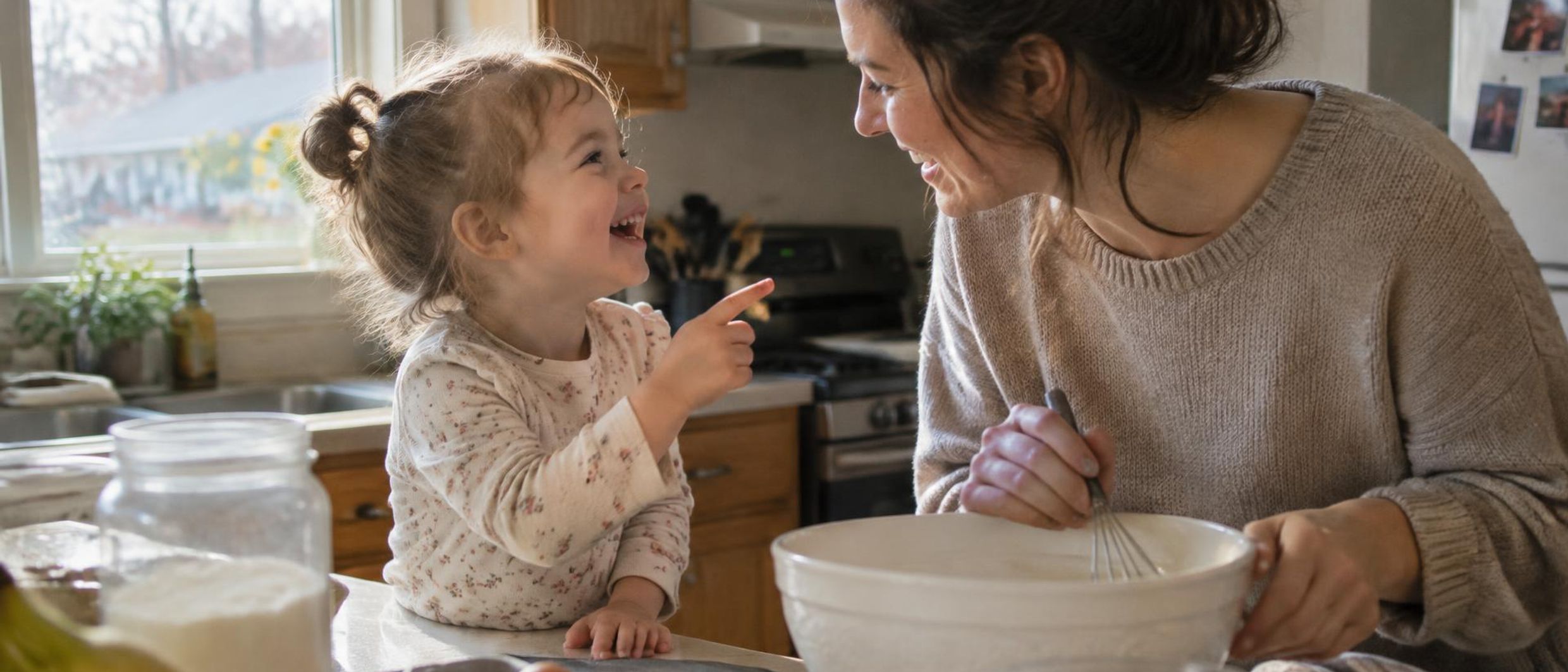
Young children build language fastest inside the ordinary routines they already know — meals, baths, car rides, laundry, bedtime. Because a routine repeats every day, its words repeat every day too, and repetition is exactly what a developing brain needs. You don’t have to add anything to your schedule. You just talk a little differently inside what you’re already doing.
Why routines beat activities
A new activity — a craft, a game, an app — competes for your child’s attention, and it’s over in minutes. A routine is the opposite. Your child already knows the script: the cereal comes out of the box, the socks go in the drawer, the water fills the tub. Because the script is familiar, they have attention to spare for the words, and you have a natural place to pause and hand the next line over to them.
That pause is the whole trick. Say what comes next, then stop, look at your child, and wait. That small silence is an invitation. Whether they fill it with a word, a sound, or a point, you’ve just given them a real reason to communicate — with no materials and no setup.
Meals: name it, offer it, wait
Meals happen two or three times a day, which makes them the best built-in language practice you own. A few small changes go a long way:
- Offer choices. “Apple or banana?” works better than “Do you want an apple?” A choice demands an answer, and a two-word question hands a small child a two-word answer to aim for.
- Talk in tiny phrases. Skip the running commentary. One to three words at a time is easier for a young brain to grab: “Banana! Peel, peel, peel. Open. Yum.”
- Make friendly mistakes. Hand your child the spoon when they asked for the cup, then pause. “Silly!” Mix-ups like that pull corrections out of kids, and a correction is communication.
- Hold the goods a beat longer. Keep the yogurt just out of reach for one second and wait for a request — a word, a sound, even a point with eye contact counts.
In the car: a lesson with a captive audience
Nobody can escape the car seat, which makes the car a surprisingly great place for language. You also don’t have to be watching your child, so it’s low pressure for everyone.
- Narrate the window. “Red truck! Dog. Big rain. Where’s the moon?” Naming what you both see is shared attention, which is the foundation everything else sits on.
- Sing the same songs. The Wheels on the Bus beats novelty every time, because predictability is what lets a child join in — first on the chorus, then word by word.
- Leave some quiet. Resist filling every mile. Kids need silence to process what they’ve heard, and the child who isn’t being talked at is often the one who starts talking.
Bath and bedtime: the easiest ten minutes of your day
Bath time has a built-in, unchanging script — clothes off, water on, wash, rinse, towel — and a child who knows what comes next can start predicting it in words. Body-part naming is free here: “Wash your toes. Now your belly. Where are your ears?”
At bedtime, let your child choose between two books (“Bear book or truck book?”), pause before the last page of a favorite and let them finish the line, and sing the same goodnight song every night. Sameness feels boring to you and is gold to a two-year-old.
Your child doesn’t need a better activity. They need more turns in the routines you’re already sharing.
Laundry, errands, and the chances you’re already taking
The chores you’re doing anyway are narrated tours waiting to happen. Try building one or two of these into your week:
- Laundry. Sort out loud — “Daddy’s sock, your sock” — and hand your child pieces one at a time so each item needs a request.
- Grocery runs. Name foods as they go in the cart, then hand the job over: “Can you find the red apples?” Older toddlers love being the shopper.
- Getting dressed. “Arm in. Other arm. Zip!” Short, predictable phrases repeated every morning eventually get finished by your child.
What this can — and can’t — do
Everyday language building is genuinely powerful, and for many children these small changes are the difference between a word here and a sentence there. But honest limits matter too. If your child is a late talker, or you’re not sure whether their speech is on track, home strategies help — they don’t replace a closer look.
And if you’ve been carrying a quiet worry for a while, a free 15-minute call is the easiest way to settle it. Tell me your child’s age and what you’re noticing — I’ll give you a plain answer about whether an evaluation makes sense.